
Matching Go! - Puzzle Games
Lynn Mobile Puzzle GamesCasual
4.7477.00 Reviews
- Version
- 2.5.0
- Installs
- 1.00M
- Age Rating
- Everyone
Screenshots
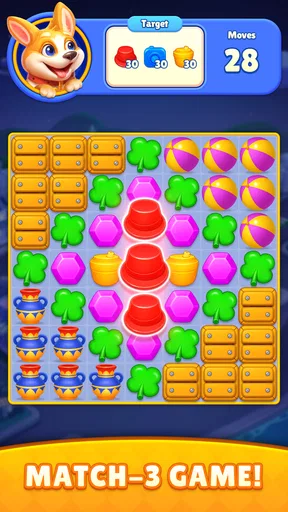
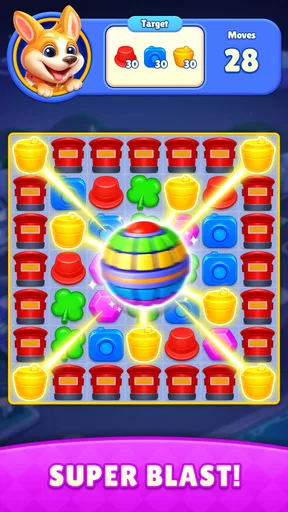
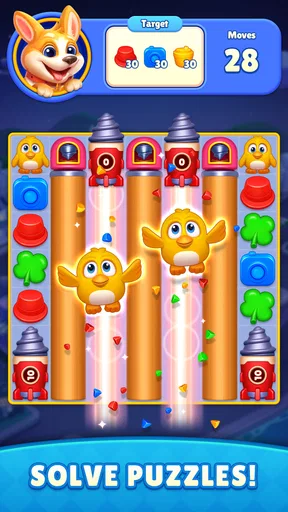
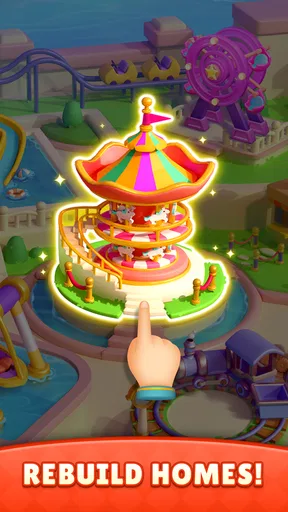

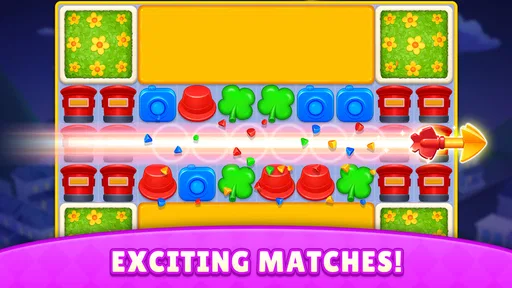
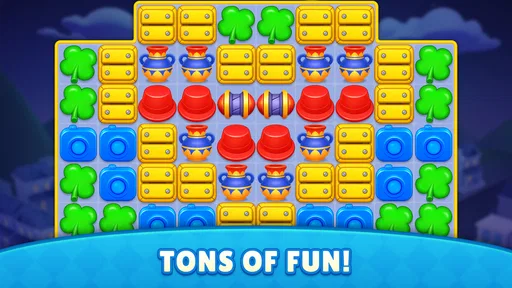
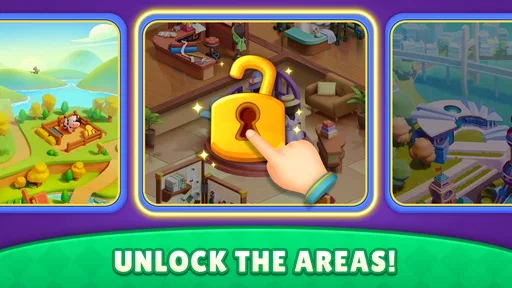
Our Review of Matching Go! - Puzzle Games
 Analysis by Appyee
I spent time with Matching Go! - Puzzle Games as a light, casual matching game, and my first impression was that it understands the value of a clear objective. You are not dropped into a complicated ruleset or asked to learn a large collection of systems before playing. The central appeal is the relationship between tricky puzzles, rescue-oriented goals, and the chance to restore attractive living spaces. That combination gives each session more purpose than simply clearing a board and moving on.
The game is free to download and aimed at Everyone, so it is easy to approach as a family-friendly time filler. Lynn Mobile Puzzle Games is the developer, and the title has already passed one million installs with a 4.7 average from roughly 5.4 thousand ratings. Those figures suggest that the basic formula has found a substantial audience, but they do not replace personal preference: this is still a game built around short, repeatable puzzle sessions rather than a deep strategy experience.
How the puzzle loop builds momentum
I find the puzzle loop works best when I treat each board as a small decision-making exercise, not a race to tap the first match I see. That habit makes retries more informative: I can change an early choice and notice how it affects the options left later. It also gives the rescue and rebuilding goals room to feel like a steady reward, which is useful when deciding how to share play on a household device.
Early goals give each match a reason to matter
The strongest part of the opening is the way the game connects matching with a wider task. A conventional matching title can feel like an endless stack of unrelated boards, especially when the only reward is reaching the next level. Here, the rescue theme and the rebuilding of dreamy homes give the activity a visible direction. I found that useful because it made a difficult board feel like a temporary obstacle in a larger journey instead of an isolated test.
That structure also makes the game approachable for people who enjoy decoration or light narrative framing but do not want a demanding simulation. You can focus on the puzzle itself, yet the surrounding goals provide a reason to keep going. In an everyday situation, I can see this working well during a commute, a short break, or while waiting for an appointment: one or two attempts offer a complete little activity, while longer sessions let you make more noticeable progress through the restoration theme.
The early objectives are especially helpful for new players who might otherwise judge a matching game too quickly. The rules are familiar enough to understand without a long explanation, but the rescue and rebuilding context gives the first stages a little emotional direction. I would not call it a story-heavy game, and anyone expecting a fully developed adventure may find the framing modest. Still, it is more motivating than a bare sequence of anonymous puzzles.
Progress is easiest to notice through the changing purpose of play
One of my practical observations is that progress in this kind of game works on two levels. There is the immediate satisfaction of solving a board, and there is the longer-term feeling that successful play is helping move a rescue or home-rebuilding objective forward. The first layer is instant and tactile; the second is what encourages another attempt after a failure.
That distinction matters because matching games can become repetitive when every level feels interchangeable. Matching Go! gives the player a reason to look beyond the current board. Even when the puzzle itself is the main attraction, the restoration angle helps break up the rhythm and makes progress easier to interpret. I recommend paying attention to the broader objective rather than treating every level as a standalone score challenge. That mindset makes the pacing feel more purposeful.
The game is also a good fit for players who like visible completion more than open-ended competition. I did not approach it as a game for chasing leaderboards or comparing technical performance with other people. Its appeal is personal advancement: solve the current challenge, support the rescue theme, and continue improving the homes. If your favorite casual games are those that let you steadily transform a world, this setup should feel more satisfying than a purely abstract matching app.
The challenge works best when you plan instead of rushing
The word “tricky” is important here. The puzzles are not presented as something to solve automatically while barely looking at the screen. I found that careless moves can reduce the options available later, so it pays to pause and inspect the board before committing. Looking for combinations that open space, preserve useful tiles, or create a better follow-up is more reliable than immediately taking the first available match.
My most useful habit was to treat the opening moves as preparation. Rather than spending every convenient match at once, I would check whether a different choice could expose a more valuable line or keep the board flexible. This is a small adjustment, but it changes the experience from simple tapping into light planning. It also helps explain why a level can feel easy on one attempt and unexpectedly awkward on another: the order of decisions matters.
That said, I would not describe the game as a serious puzzle laboratory. It is still designed for casual play, and the appeal comes from a balance between thought and accessibility. Players who want dense logic problems with one exact solution may find the matching format too relaxed. Players who want something more engaging than automatic tile clearing should appreciate the need to read the board and think ahead.
The difficulty curve rewards patience more than speed
The most comfortable way to play is to accept that not every board needs to be solved immediately. When a level becomes awkward, repeating it with a different opening plan can be more productive than tapping faster. I found this especially relevant when a tempting match seemed to offer quick progress but left the remaining area less manageable. The better move was often the one that preserved future choices rather than the one that looked best in isolation.
This creates a gentle form of learning. You start by recognizing matches, then gradually begin noticing board shape, available space, and the consequences of clearing one area before another. That is a useful difficulty curve for a casual game because the player develops better habits without needing a formal tutorial for every decision. The challenge comes from applying familiar rules more intelligently.
There is a trade-off, though. If you prefer constant novelty, repeating a difficult stage may feel like a slowdown rather than a lesson. The game’s progression is more appealing to someone who enjoys refining an approach. It is less suitable for a player who wants every minute to introduce a completely different mechanic or a major change of pace.
What keeps the loop going, and where the pressure can appear
The rescue and home-restoration objectives are the main retention tools I noticed. They create a reason to return after closing the app, because the next session is connected to an unfinished goal. This is a familiar but effective design choice: the puzzle provides the moment-to-moment activity, while the larger objective supplies continuity.
Because the game is free, it also includes in-app purchases ranging from $0.99 to $99.99 per item. That is worth considering before recommending it to a child or to anyone who prefers completely pressure-free casual games. I would approach the purchase layer carefully and decide in advance whether I want to spend anything. The core attraction is the matching and rebuilding loop, so I would not install it with the assumption that spending is necessary for enjoyment.
My advice is to treat the game as a controlled short-session activity rather than something that should occupy every spare moment. Set a personal stopping point after a few boards, especially if a difficult level makes you feel compelled to keep trying. This is not a criticism unique to this title; it is simply the sensible way to handle a progression game that combines repeated puzzles with unfinished restoration goals. The best experience comes from choosing when to continue, not feeling obliged to continue.
For parents, the Everyone rating makes the game easier to consider as a family-friendly option, but the presence of purchases still deserves attention. A child may understand the matching rules quickly while paying less attention to the value of optional transactions. I would introduce it with clear expectations about purchases and play time. For adults, the same information is useful in a different way: the game works well as a casual break, but it may not be ideal if you are trying to avoid all forms of progression pressure.
How it compares with familiar matching alternatives
Compared with a basic match-three game that focuses only on points or level completion, this title has a stronger sense of context. The rescue and rebuilding themes give the boards a destination, which can make the repeated format easier to stick with. I prefer that approach when I want a puzzle game with a little atmosphere rather than an entirely abstract challenge.
Compared with a decoration-focused game, however, the puzzle remains the center of attention. The home-rebuilding idea supports the loop; it does not turn the app into a detailed interior-design tool. Someone choosing this primarily for creative decorating may find the matching stages more prominent than expected. In that case, a dedicated design game would probably be a better fit.
It also sits between relaxing and demanding alternatives. It is more involved than a game where matches happen with almost no thought, but it is not aimed at players seeking advanced competitive strategy. I would recommend it to someone who wants familiar rules with enough friction to make decisions meaningful. I would skip it in favor of a pure logic game if my priority were difficult brainteasers, or choose a more competitive matching title if I wanted rankings and direct comparison.
Small habits that make the experience better
First, I suggest scanning the whole board before making the opening move. The first available match is not always the most useful one, and a few seconds of observation can prevent a poor sequence. This is particularly valuable when the board offers several equally obvious choices.
Second, when a stage goes badly, change the order of your early moves rather than repeating the same pattern. A failed attempt can reveal which area becomes restricted or which choice removes useful flexibility. That turns failure into information instead of simply another lost try.
Third, connect your session length to a concrete goal. I might play until I complete a puzzle or reach a natural restoration step, then stop. This keeps the game feeling like a small accomplishment instead of an endless obligation. It is also a practical way to enjoy the rebuilding theme without letting the unfinished objective dictate my schedule.
Finally, keep the purchase range in mind before beginning a long session. The game is free to start, but optional spending can be significant at the upper end. I would make any decision based on my own limits, not on the excitement of being close to a goal. That simple rule protects the casual nature of the experience.
Device access and who should try it
The current version is 2.5.0, and the game supports devices running Android 7.0 or later. That makes it accessible to many older Android phones and tablets, which is useful if you are looking for a casual title without needing a recent device. I would still judge the experience on the particular screen and hardware available, since matching games benefit from comfortable touch controls and a display large enough to inspect the board easily.
I think the best audience is someone who likes familiar matching mechanics, light goals, and a gradual sense of restoration. It is also suitable for players who enjoy retrying a puzzle with a better plan instead of demanding instant success. The rescue theme adds enough identity to make it stand apart from a completely generic board-clearing game.
I would be more cautious about recommending it to people who dislike repeated attempts, optional purchases, or progression systems built around returning to unfinished goals. It is also not my first choice for someone seeking a rich narrative, detailed decorating controls, or high-level competitive play. Knowing that before installing it prevents the most likely disappointment.
My verdict on the progression
After playing through the loop, I see Matching Go! as a well-targeted casual puzzle game rather than an ambitious all-purpose mobile experience. Its progression works because the immediate matching challenge and the broader rescue-and-rebuild direction support each other. The puzzles ask for enough attention to keep the player involved, while the home objectives make successful stages feel connected.
The pacing is strongest when I play in short bursts and let the goals provide gentle motivation rather than treating them as demands. The game’s biggest weakness is the possibility that repeated attempts and purchase prompts may feel like pressure to players who want a completely frictionless pastime. That does not cancel out the appeal, but it does make personal play habits important.
With a 4.7 average and more than a million installs, it is clearly reaching the audience it targets. My recommendation is straightforward: try it if you want casual matching puzzles with rescue goals and a dreamy rebuilding backdrop. Keep your expectations focused on thoughtful board decisions and steady progress, not deep simulation or competitive complexity. For me, that balance makes it a pleasant choice for short breaks, provided I stay in control of the pace and spending.
Overall, Matching Go! - Puzzle Games earns its place among approachable casual titles by giving familiar matches a more meaningful destination. Lynn Mobile Puzzle Games has built the experience around a simple idea, but the combination of planning, retries, rescue, and restoration gives that idea enough structure to sustain interest. I would recommend it to a friend who wants a calm but not completely mindless puzzle game, while being honest that players who dislike repetition or in-app purchase pressure should look elsewhere.
Verdict
Strengths of Matching Go! - Puzzle Games
- Simple matching mechanics are easy to learn for players of all ages.
- Short levels make it convenient for quick gaming sessions.
- Bright visuals and cheerful effects make the game feel engaging.
- Progressive challenges help keep the gameplay from becoming repetitive.
- Offline play is useful when you have limited or no internet access.
Limitations of Matching Go! - Puzzle Games
- Some levels may feel repetitive after extended play sessions.
- Difficulty can increase sharply and may require several attempts.
- Frequent ads may interrupt the flow between levels.
- Extra moves or boosters may be limited without optional purchases.
- The game may use noticeable battery power during longer sessions.
Other Releases by Lynn Mobile Puzzle Games
View All
Solitaire Classic
Card4.7
Similar Picks in This Category
View All
My Talking Angela
Outfit7 Limited4.2

My Talking Tom
Outfit7 Limited4.3

Pou
Zakeh4.2

My Talking Tom 2: Pet Game
Outfit7 Limited4.3

Candy Crush Saga
King4.6

Bridge Race
Supersonic Studios LTD4.1
Frequently Asked Questions
What is Matching Go! - Puzzle Games?
Matching Go! - Puzzle Games is a casual puzzle app built around matching objects or tiles to clear the board and complete levels. Its gameplay is easy to understand, making it suitable for quick sessions, while later stages generally introduce more complicated layouts, limited moves, obstacles, or special objectives. It is designed for players who enjoy relaxing, pick-up-and-play challenges rather than a story-driven adventure.
How do you play Matching Go! - Puzzle Games?
The basic idea is to identify matching items and combine or select them according to the rules shown in each level. Before making a move, it is worth checking the entire board because a careless match can remove a useful option or leave an awkward arrangement. As levels become more demanding, planning several moves ahead, using available boosters carefully, and prioritizing the level objective can make a noticeable difference.
Is Matching Go! - Puzzle Games free to download and play?
Matching Go! - Puzzle Games can generally be downloaded without an upfront payment, but free access may be supported by advertising, optional in-app purchases, or both, depending on the version and platform. Purchases may provide extra lives, hints, boosters, or other conveniences. Before spending money, users should review the store listing and device purchase settings, especially if children may use the app.
Does Matching Go! - Puzzle Games work offline?
Some core puzzle levels may remain playable without a constant internet connection, which is useful during travel or when mobile data is limited. However, advertisements, cloud synchronization, events, leaderboards, updates, and in-app purchases may require internet access. Offline behavior can also vary between Android and iOS versions, so it is best to test the game after installation rather than assuming every feature will be available without a connection.
Is Matching Go! - Puzzle Games suitable for children and all players?
The matching-based gameplay is simple enough for many children and casual players to understand, and the short levels make it approachable for beginners. Nevertheless, difficulty can increase over time, and the app may include advertisements, optional purchases, or promotional prompts. Parents should check the age rating, privacy information, and purchase controls on the relevant app store before allowing younger users to play independently.
Play our best games!


